before 1689
Ursus and Homo
[Ursus](entity:character-recall-character-ursus-ac9f458d8b7a), a wandering scholar, doctor, performer, and misanthrope, travels the roads of [England](entity:location-recall-location-england-b153c1f368ea) with [Homo](entity:character-recall-character-homo-d6a70e3eae19), a wolf he has made his partner. They earn their living with speeches, tricks, medicines, and performances, sharing a small van and a wary independence from settled society.
Ursus’s bitter talk conceals a capacity for practical kindness. His companionship with Homo establishes the unconventional household that will later shelter two abandoned children.
the seventeenth century
The Comprachicos Trade
The Comprachicos buy children and deliberately disfigure them for profit, shaping them into entertainers and human curiosities. Their trade flourishes in a society where the powerful treat vulnerable people as property and amusement.
Under [King James II](entity:character-recall-character-bdcfd7392544), the group can serve the interests of royal policy by removing inconvenient heirs. Their crimes provide the hidden background to the child whose fate will drive the story.
after the Glorious Revolution of 1688
The Decree Against the Comprachicos
After [William III](entity:character-recall-character-7677eccc11dc) replaces [King James II](entity:character-recall-character-bdcfd7392544), the new government moves against the Comprachicos. The decree threatens captured members with branding, imprisonment, and severe punishments, making flight essential for the wandering bands.
The crackdown has an unintended consequence: poor wanderers fear that any child in their company will expose them to suspicion, and some abandon children to escape scrutiny. A law intended to protect children therefore helps create fresh abandonment.
after the Restoration of 1660
Clancharlie’s Exile
[Linnæus, Lord Clancharlie](entity:character-recall-character-linn-us-lord-clanch-64fcd7c3d442), remains loyal to the English Republic even after the monarchy is restored. Rather than reconcile with [Charles II](entity:character-recall-character-charles-ii-6a95b492be4f), he withdraws to [Switzerland](entity:location-recall-location-switzerland-0000fd9db54c), where he lives in exile beside [Lake Geneva](entity:location-recall-location-lake-geneva-7be17872d06b).
His refusal to return costs him his country, title, and estates. His principled isolation leaves his future inheritance exposed to the political ambitions of the Crown.
during the reigns of Charles II and King James II
David’s Courtly Rise
[Lord David Dirry-Moir](entity:character-recall-character-lord-david-dirry-mo-8f4557c9527c), the natural son of [Linnæus, Lord Clancharlie](entity:character-recall-character-linn-us-lord-clanch-64fcd7c3d442), grows up without knowing his father and prospers at court. [Charles II](entity:character-recall-character-charles-ii-6a95b492be4f) rewards his mother’s connection to the Crown with appointments for David, and [King James II](entity:character-recall-character-bdcfd7392544) later advances him further.
David becomes a handsome, capable officer and a favourite of fashionable society. His secure place in the royal world contrasts with the lawful heir’s dispossession.
after the reported death of Linnæus, before 1689
The Inheritance Arrangement
Reports from [Switzerland](entity:location-recall-location-switzerland-0000fd9db54c) say that [Linnæus, Lord Clancharlie](entity:character-recall-character-linn-us-lord-clanch-64fcd7c3d442) married Ann Bradshaw in exile and had a legitimate son. [King James II](entity:character-recall-character-bdcfd7392544) declares [Lord David Dirry-Moir](entity:character-recall-character-lord-david-dirry-mo-8f4557c9527c) heir in default of legitimate issue and ties the inheritance to a future marriage with the infant [Duchess Josiana](entity:character-recall-character-duchess-josiana-119a7ed16126).
The arrangement converts a disputed family history into a royal instrument. If a legitimate heir exists, both David’s title and [Josiana](entity:character-recall-character-josiana-ea646c5ce344)’s provisional control of the Clancharlie estates are vulnerable.
before 1689
Barkilphedro Gains an Office
[Barkilphedro](entity:character-recall-character-barkilphedro-0840939ec42a), a fallen court servant with literary ambitions, persuades [Duchess Josiana](entity:character-recall-character-duchess-josiana-119a7ed16126) to secure him a place at the Admiralty. He becomes the official responsible for opening sealed messages and other objects cast ashore as sea prizes.
The modest post gives him access to secrets from the sea and a route toward [Queen Anne](entity:character-recall-character-queen-anne-325df9e2ae3c)’s court. The appointment will eventually put a forgotten confession within his reach.
after his appointment and before 1705
Barkilphedro’s Hidden Resentment
Although [Duchess Josiana](entity:character-recall-character-duchess-josiana-119a7ed16126) has rescued him from hardship, [Barkilphedro](entity:character-recall-character-barkilphedro-0840939ec42a) resents her wealth and the dependence her favor creates. He turns gratitude into a grievance and quietly resolves to humiliate her.
His new influence at court lets him observe both [Josiana](entity:character-recall-character-josiana-ea646c5ce344) and [Lord David Dirry-Moir](entity:character-recall-character-lord-david-dirry-mo-8f4557c9527c). He waits for an unforeseen opportunity that can injure the woman who helped him.
December 1689 through January 1690
The Winter of Abandonment
A severe winter brings famine and deaths from cold across [England](entity:location-recall-location-england-b153c1f368ea). The [Thames](entity:location-recall-location-143f23c5f9dc) freezes, while wind and snow make the coasts and open country especially dangerous for the poor.
On the coast of the [Isle of Portland](entity:location-recall-location-isle-of-portland-495f15b03fae), a band of fugitives prepares to flee by sea. Among them is a boy of about ten, carrying no knowledge of the world beyond the people who have used him.
January 29, 1690, at dusk
The Boy Left Ashore
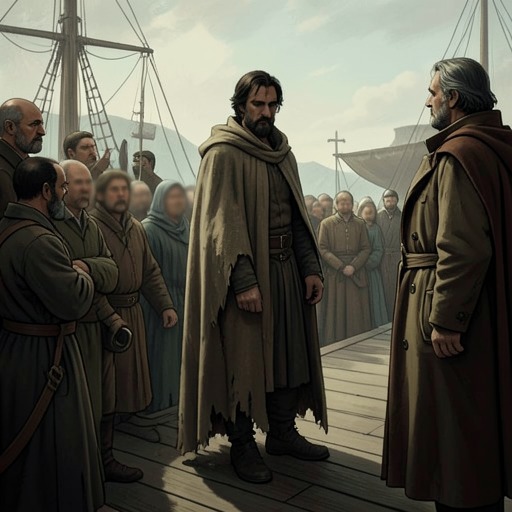
A mixed band of fugitives boards the Biscayan hooker [Matutina](entity:object-recall-object-matutina-f0b25178d1c9) in a hidden creek at [Portland Bay](entity:location-recall-location-portland-bay-d2d0746799d8). As the boy tries to cross the plank, the adults shove him back, kick the plank into the water, and cut the vessel loose.
No one calls to him or explains what has happened. The Matutina sails away, leaving him alone on the winter coast and severing him from the only human company he has known.
the first hours after dusk on January 29, 1690
The Climb from the Creek
The abandoned boy stands motionless until the rising tide and cold force him into action. He climbs the steep cliffs in darkness, slipping on ice and loose slate, and reaches the exposed tableland above.
With no map, destination, or shelter in sight, he turns inland. His journey begins as an instinctive flight from the place where he has been discarded.
later that night
The Gibbet and the Ravens
On a hill the boy discovers the tarred corpse of a smuggler hanging from a gibbet, preserved as a warning to sailors. [Ravens](entity:creature-recall-creature-ravens-d0a146225757) settle on the remains, and the rising storm makes the body swing and struggle among the birds.
The spectacle terrifies him into running across the plain. He survives the immediate danger, but the public display of a dead man becomes his first stark encounter with the violence of human law.
the night of January 29, 1690
The Matutina Enters the Storm
At sea, the [Matutina](entity:object-recall-object-matutina-f0b25178d1c9) carries the fugitives south while its skipper watches the changing wind and an elderly passenger studies the sky. The passenger warns that a strange snowstorm is approaching and urges the skipper to steer west.
The skipper doubts the warning but follows it. When a bell sounds through the darkness, the old man explains that it comes from a buoy and signals that the ship is being driven toward the dangerous reefs.
during the storm, late on January 29, 1690
The Wreck at the Caskets
The hurricane destroys the [Matutina](entity:object-recall-object-matutina-f0b25178d1c9)’s mast, rigging, boat, and steering gear, and sweeps the skipper overboard. The crew and passengers are left helpless as the wreck races toward the [Caskets](entity:location-recall-location-caskets-3e9eb1c9728d).
A desperate maneuver with a heavy beam turns the vessel away from the reef at the last moment. The escape buys only a brief reprieve: the [Caskets Lighthouse](entity:location-recall-location-caskets-lighthouse-4f096817b481) fades behind them, and the wreck drifts back into the storm.
later in the same storm
Ortach and Aurigny
Driven onward, the wreck narrowly escapes [Ortach Rock](entity:location-recall-location-ortach-rock-61d6e2896164) when a wave carries it back from the reef. It then drifts toward the dangerous races and shoals off [Aurigny](entity:location-recall-location-aurigny-350937dd06f1).
A sudden change of wind pulls the ship free, but the change leaves it damaged and at the mercy of the water. The survivors mistake each temporary reprieve for safety as the sea repeatedly restores danger.
near midnight on January 29, 1690
The Ship Falls Silent
The storm abruptly ceases, and the exhausted survivors believe they may live until rescue. A sailor discovers that the hold is filling with water; the pump and steering gear are gone, and the calm prevents the wreck from reaching land.
The group throws luggage, provisions, and equipment overboard, but cannot find or stop the leak. The calm that seemed to promise deliverance becomes the force that ensures their slow sinking.
the final minutes before the Matutina sinks
The Confession in the Flask
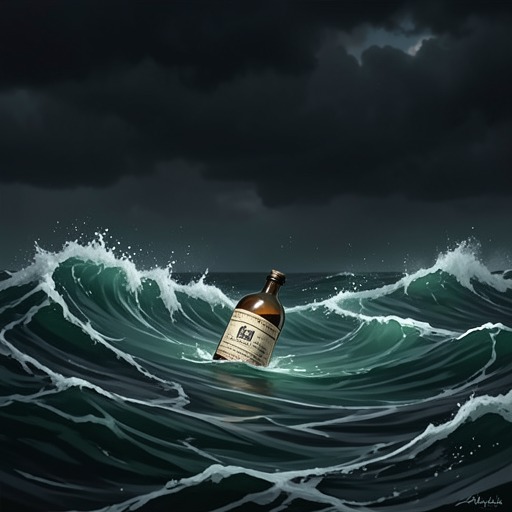
[Gernardus Geestemunde](entity:character-recall-character-gernardus-geestemun-8f626eae5f8f) tells the doomed party to repent and repair, as far as possible, the wrong they have done to the boy. He writes their confession on a parchment, has the survivors sign it, and seals it inside [Hardquanonne’s gourd flask](entity:object-recall-object-hardquanonne-a22d7994f858).
The company prays together as the water rises over the deck. Geestemunde holds the flask above his head until he and the others drown; the wicker-covered container remains afloat and drifts away with their testimony.
the night of January 29–30, 1690
The Boy Crosses Chesil
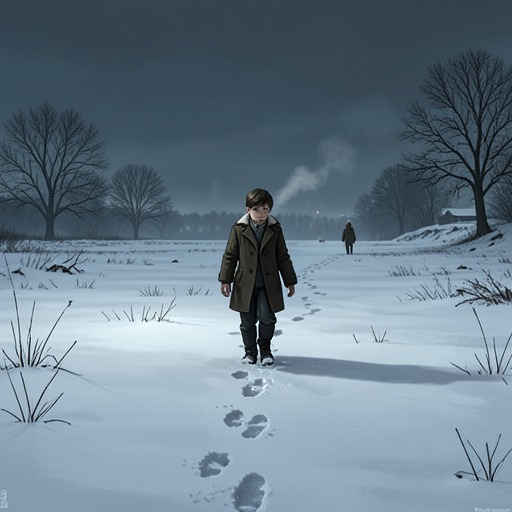
The boy crosses the hazardous [Chesil](entity:location-recall-location-chesil-6a725bd19cbd) spit in darkness, snow, and freezing water, keeping to the shore when the rocky ground becomes impassable. He follows fresh footprints across the snow, hoping they will lead toward human shelter.
The storm erases the tracks before he can reach their maker. He hears a faint cry nearby and follows it into the snow, where the next discovery changes the purpose of his journey.
after midnight on January 30, 1690
The Mother and the Infant
The boy uncovers a dead beggar woman beneath the snow and finds her infant daughter still alive against her breast. The baby’s cry has led him to them; the mother has died trying to shelter and feed her child.
The boy wraps the infant in his own warm jacket and continues through the storm nearly naked. By giving away the only protection he has, he accepts a second life as his responsibility.
the early hours of January 30, 1690
The Town Refuses Them
Carrying the infant, the boy reaches [Weymouth](entity:location-recall-location-weymouth-3a90e0ae3010) and knocks at the doors of both a poor hovel and a wealthy house. Neither opens; the sleeping town remains unmoved by a freezing child and a baby.
He continues into [Melcombe Regis](entity:location-recall-location-melcombe-regis-c2ef11df7f7a), repeatedly seeking help and receiving silence. The contrast between the exposed countryside and the sealed town deepens his sense that human society may be as inhospitable as the storm.
before dawn on January 30, 1690
Ursus Takes in the Children
Drawn by the growl of [Homo](entity:character-recall-character-homo-d6a70e3eae19), the boy finds [Ursus’s van](entity:object-recall-object-ursus-s-van-72c38ad01b96) and is first rebuffed, then summoned inside. [Ursus](entity:character-recall-character-ursus-ac9f458d8b7a) strips off his frozen clothes, feeds him, and discovers the infant concealed in the bundle.
Though he grumbles about the cost and inconvenience, Ursus feeds and warms the girl too, then gives both children his bearskin for a bed. The misanthrope’s actions establish a family founded on practical care rather than blood.
the morning of January 30, 1690
The Faces Revealed
After [Homo](entity:character-recall-character-homo-d6a70e3eae19) helps [Ursus](entity:character-recall-character-ursus-ac9f458d8b7a) locate the dead mother, Ursus accepts the infant as part of the household. In daylight he sees that the boy’s face has been cut into a permanent grin, while the girl is blind.
Ursus recognizes the boy’s condition as deliberate work of the Comprachicos and understands that the two children have been altered by cruelty before he ever met them. He names the girl [Dea](entity:character-recall-character-dea-4145330b30d2) and keeps the boy’s given name, [Gwynplaine](entity:character-recall-character-gwynplaine-80175ea7b221).
from 1690 through the following years
A Childhood Together
[Ursus](entity:character-recall-character-ursus-ac9f458d8b7a) raises [Gwynplaine and Dea](entity:relation-recall-relation-gwynplaine-and-dea-d206f4e70b58) as his children, teaching [Gwynplaine](entity:character-recall-character-gwynplaine-80175ea7b221) languages, music, philosophy, and the skills needed for performance. [Dea’s blindness](entity:state-recall-state-dea-s-blindness-c2dfef764da7) and [Gwynplaine’s disfigurement](entity:state-recall-state-gwynplaine-s-disfigurem-98bee4eab80c) shape their daily life, but neither prevents their growing affection.
[Dea](entity:character-recall-character-dea-4145330b30d2) loves Gwynplaine for his kindness and sees the goodness his face conceals. Gwynplaine becomes her guide and protector, and their mutual dependence turns two injuries into a private refuge.
by 1704
The Green Box Succeeds
As [Gwynplaine](entity:character-recall-character-gwynplaine-80175ea7b221) grows, [Ursus](entity:character-recall-character-ursus-ac9f458d8b7a) develops the small van into the [Green Box](entity:location-recall-location-green-box-0c89d881e402), a traveling theatre staffed by [Fibi](entity:character-recall-character-fibi-43b69b3d32fe) and [Vinos](entity:character-recall-character-vinos-77ec8e7ec412) and supported by [Homo](entity:character-recall-character-homo-d6a70e3eae19). Gwynplaine’s face draws crowds, while [Dea](entity:character-recall-character-dea-4145330b30d2) sings and Ursus writes and performs.
The success provides enough money for food, shelter, and a degree of independence. It also makes the troupe visible, exposing its fragile happiness to public attention and the laws governing performers and wolves.
during the years of the troupe’s success
The Laughing Man’s Act
[Ursus](entity:character-recall-character-ursus-ac9f458d8b7a) creates Chaos Vanquished, an allegorical performance in which [Dea](entity:character-recall-character-dea-4145330b30d2)’s song rescues a man from the forces of chaos. At the climax, a light reveals [Gwynplaine](entity:character-recall-character-gwynplaine-80175ea7b221)’s disfigured face, and the audience erupts in laughter.
Gwynplaine’s expression laughs regardless of what he feels. The act makes him famous and profitable, but its success also fixes him in the public imagination as a spectacle rather than a person.
the winter of 1704–1705
The Household Reaches London
[Ursus](entity:character-recall-character-ursus-ac9f458d8b7a) brings the [Green Box troupe](entity:organization-recall-organization-green-box-troupe-7b0ef2260b04) to [Southwark](entity:location-recall-location-southwark-1b8d7f8e417b) and arranges performances at the [Tadcaster Inn](entity:location-recall-location-ac1a4df52aeb) in [Tarrinzeau Field](entity:location-recall-location-tarrinzeau-field-060613f9ed3f). The show quickly draws large crowds, while the special space reserved for fashionable patrons remains empty.
The troupe’s success attracts envy from other performers and complaints from clergy and authorities. The wolf [Homo](entity:character-recall-character-homo-d6a70e3eae19) and [Gwynplaine](entity:character-recall-character-gwynplaine-80175ea7b221)’s political remarks provide possible grounds for intervention.
around 1705, before Gwynplaine’s arrest
David and Josiana’s Unfinished Match
[Duchess Josiana](entity:character-recall-character-duchess-josiana-119a7ed16126) and [Lord David Dirry-Moir](entity:character-recall-character-lord-david-dirry-mo-8f4557c9527c) remain betrothed by royal arrangement but delay marriage. [Josiana](entity:character-recall-character-josiana-ea646c5ce344) values her freedom and enjoys the fashionable courtship, while David preserves his reputation as a handsome, rakish officer.
Their relationship rests on privilege and mutual convenience rather than settled commitment. The looming possibility of a legitimate Clancharlie heir threatens the arrangement that has secured David’s position.
the winter of 1704–1705
The Prizefight at Lambeth
[Josiana](entity:character-recall-character-josiana-ea646c5ce344), dressed as a man, attends a brutal prizefight at [Lambeth](entity:location-recall-location-lambeth-c7fb13246a25) with David. The smaller Scottish fighter Helmsgail dominates the Irishman Phelem-ghe-Madone until Phelem lands a foul blow that leaves both men badly injured.
The spectacle fails to cure Josiana’s boredom. David suggests that the Laughing Man might do what the fight could not, linking the aristocratic world of violent entertainment to [Gwynplaine](entity:character-recall-character-gwynplaine-80175ea7b221)’s public act.
shortly before Gwynplaine’s arrest in 1705
Josiana Sees Gwynplaine
[Josiana](entity:character-recall-character-josiana-ea646c5ce344) attends a performance of Chaos Vanquished from the reserved box at the [Tadcaster Inn](entity:location-recall-location-ac1a4df52aeb). She watches [Gwynplaine and Dea](entity:relation-recall-relation-gwynplaine-and-dea-d206f4e70b58) but does not laugh when the audience erupts at [Gwynplaine](entity:character-recall-character-gwynplaine-80175ea7b221)’s face.
She leaves an unusually valuable gold coin and departs in her carriage with the man known to the troupe as [Tom-Jim-Jack](entity:character-recall-character-tom-jim-jack-a2d751176a09). The encounter awakens Gwynplaine’s curiosity about a woman whose beauty and rank seem impossibly distant from his life.
the night after Josiana’s performance
The Duchess’s Letter
As [Gwynplaine](entity:character-recall-character-gwynplaine-80175ea7b221) wanders alone after the show, [Josiana](entity:character-recall-character-josiana-ea646c5ce344)’s page slips him a letter inviting him to meet her. Its blunt declaration says that she desires him despite his deformity and her rank.
Gwynplaine is shaken by the offer and by the pride it awakens. The next morning, [Dea](entity:character-recall-character-dea-4145330b30d2)’s presence restores his loyalty to their shared life, and he burns the letter without telling her.
the days before Gwynplaine’s arrest
The Authorities Close In
[Ursus](entity:character-recall-character-ursus-ac9f458d8b7a) learns that rival performers and local clergy have complained about the [Green Box](entity:location-recall-location-green-box-0c89d881e402), its performances, and [Homo](entity:character-recall-character-homo-d6a70e3eae19). He also fears the consequences of [Gwynplaine](entity:character-recall-character-gwynplaine-80175ea7b221)’s remarks about royal taxes and the farthing bearing the queen’s image.
Ursus warns Gwynplaine to stay silent and avoid political speech. He believes caution may keep the troupe beyond the reach of officials, though he knows how little protection the law affords the poor.
early morning in 1705
Gwynplaine’s Arrest
During breakfast, a silent police officer touches [Gwynplaine](entity:character-recall-character-gwynplaine-80175ea7b221) with the iron staff and orders him to follow. Gwynplaine obeys rather than frighten [Dea](entity:character-recall-character-dea-4145330b30d2), who does not understand what is happening.
[Ursus](entity:character-recall-character-ursus-ac9f458d8b7a) secretly follows the procession and watches it turn toward [Southwark Jail](entity:location-recall-location-249aae9e4b80) rather than a local magistrate’s court. The direction convinces him that the arrest is grave and that he cannot intervene openly.
later that morning
The Prisoner in the Cell
Inside [Southwark Jail](entity:location-recall-location-249aae9e4b80), [Gwynplaine](entity:character-recall-character-gwynplaine-80175ea7b221) is taken through dark passages to a torture chamber. A naked prisoner lies chained to four pillars beneath an iron plate and stones, while the sheriff and officials demand that he answer questions.
The prisoner has endured peine forte et dure for refusing to speak. The scene reveals the brutality of the legal order and leaves Gwynplaine unable to understand why he has been brought there.
the confrontation in Southwark Jail
Hardquanonne Recognizes Him
The sheriff orders the tortured prisoner to look at [Gwynplaine](entity:character-recall-character-gwynplaine-80175ea7b221). [Hardquanonne](entity:character-recall-character-hardquanonne-f653619fdc84) opens his eyes, recognizes him, and cries that it is the same child whose face he helped alter.
His identification transforms Gwynplaine’s unexplained arrest into a confrontation with the hidden crime of his childhood. The officials record the recognition as evidence against Hardquanonne.
immediately after the identification
The Flask’s Confession
The sheriff reads the parchment found in [Hardquanonne’s flask](entity:object-recall-object-hardquanonne-s-flask-b988f52b638c). It records that [Gwynplaine](entity:character-recall-character-gwynplaine-80175ea7b221) is Fermain Clancharlie, the legitimate son of [Linnæus, Lord Clancharlie](entity:character-recall-character-linn-us-lord-clanch-64fcd7c3d442), and that [King James II](entity:character-recall-character-bdcfd7392544) ordered him sold, disfigured, and removed from the inheritance.
The parchment bears the royal notation [Jussu regis](entity:expression-recall-expression-jussu-regis-6942341c84d5) and the signature of [Jeffreys](entity:character-recall-character-jeffreys-b94db0dfc207). [Hardquanonne](entity:character-recall-character-hardquanonne-f653619fdc84) confirms that the king ordered the crime and that he performed the mutilation, then dies under the effects of his torture.
later that day
Gwynplaine’s Birthright Restored
The sheriff declares [Gwynplaine](entity:character-recall-character-gwynplaine-80175ea7b221) to be Lord Fermain Clancharlie, legitimate heir to the family’s titles and estates. [Barkilphedro](entity:character-recall-character-barkilphedro-0840939ec42a) explains that the flask was found and opened through his Admiralty office, then tells Gwynplaine that he is wealthy, a peer, and intended to marry [Duchess Josiana](entity:character-recall-character-duchess-josiana-119a7ed16126).
Gwynplaine faints under the sudden reversal. The confession repairs the king’s dispossession of the heir, but its discovery also gives Barkilphedro a weapon against [Josiana](entity:character-recall-character-josiana-ea646c5ce344).
that night at Corleone Lodge
The Heir Awakens to Fortune
[Gwynplaine](entity:character-recall-character-gwynplaine-80175ea7b221) wakes in the luxurious [Corleone Lodge](entity:location-recall-location-corleone-lodge-062f2c3cbb1d) and hears [Barkilphedro](entity:character-recall-character-barkilphedro-0840939ec42a) describe his titles, lands, wealth, and planned admission to the [House of Lords](entity:organization-recall-organization-house-of-lords-1eddb2473408). He initially struggles to believe that the mountebank has become a peer.
Left alone, he is swept up in fantasies of power and public influence. His thoughts turn briefly from [Dea](entity:character-recall-character-dea-4145330b30d2) to the grandeur now offered him, and he mistakes sudden elevation for a chance to serve the poor.
the same evening in Southwark
Ursus Stages a Phantom Show
At the [Green Box](entity:location-recall-location-green-box-0c89d881e402), [Ursus](entity:character-recall-character-ursus-ac9f458d8b7a) tries to conceal [Gwynplaine](entity:character-recall-character-gwynplaine-80175ea7b221)’s absence from [Dea](entity:character-recall-character-dea-4145330b30d2) by imitating Gwynplaine’s voice and staging an imaginary performance. [Fibi](entity:character-recall-character-fibi-43b69b3d32fe), [Vinos](entity:character-recall-character-vinos-77ec8e7ec412), the boy Govicum, and [Homo](entity:character-recall-character-homo-d6a70e3eae19) help create the sounds of a crowd.
Dea hears that the performance is false and understands that Gwynplaine has gone. Her insight defeats Ursus’s effort to protect her from the truth, leaving him unable to explain the separation.
the next morning
The Troupe Is Ordered Out
The justice of the quorum orders [Ursus and Homo](entity:relation-recall-relation-ursus-and-homo-02ee1dcd26bd) to leave [England](entity:location-recall-location-england-b153c1f368ea) by the following day or face imprisonment and the wolf’s death. The authorities also threaten the [Tadcaster Inn](entity:location-recall-location-ac1a4df52aeb)’s landlord and the boy Govicum, and announce that the fairground will be cleared.
[Barkilphedro](entity:character-recall-character-barkilphedro-0840939ec42a) arrives with royal authority and says [Gwynplaine](entity:character-recall-character-gwynplaine-80175ea7b221) is dead, extinguishing [Ursus](entity:character-recall-character-ursus-ac9f458d8b7a)’s remaining hope. Ursus agrees to sell the [Green Box](entity:location-recall-location-green-box-0c89d881e402) and leave, but says he cannot abandon Gwynplaine.
the night before the troupe’s expulsion
The Night Burial
Unable to learn what has happened to [Gwynplaine](entity:character-recall-character-gwynplaine-80175ea7b221), [Ursus](entity:character-recall-character-ursus-ac9f458d8b7a) returns to the lane between [Southwark Jail](entity:location-recall-location-249aae9e4b80) and its cemetery. He hears the prison’s Muta bell and sees officials carry a covered bier from the jail to the graveyard.
He assumes the dead man is Gwynplaine and breaks down in grief. The coffin actually contains [Hardquanonne](entity:character-recall-character-hardquanonne-f653619fdc84), but Ursus has no way to know this and leaves the scene believing his foster son is dead.
the morning after the burial
The Household Is Scattered
The authorities close the [Tadcaster Inn](entity:location-recall-location-ac1a4df52aeb) and arrest its landlord, Master Nicless, and Govicum. [Ursus](entity:character-recall-character-ursus-ac9f458d8b7a), [Fibi](entity:character-recall-character-fibi-43b69b3d32fe), [Vinos](entity:character-recall-character-vinos-77ec8e7ec412), [Homo](entity:character-recall-character-homo-d6a70e3eae19), and [Dea](entity:character-recall-character-dea-4145330b30d2) are driven from the fairground; the [Green Box](entity:location-recall-location-green-box-0c89d881e402) is sold or removed, and the troupe’s settled life ends.
Ursus takes Dea toward the river and prepares to leave [England](entity:location-recall-location-england-b153c1f368ea). Believing [Gwynplaine](entity:character-recall-character-gwynplaine-80175ea7b221) dead, he tries to protect the surviving girl while hiding his own grief from her.
the morning after Gwynplaine’s arrival at Corleone Lodge
Josiana Rejects Her Husband
[Gwynplaine](entity:character-recall-character-gwynplaine-80175ea7b221) wakes with renewed resolve to return to [Dea](entity:character-recall-character-dea-4145330b30d2), but becomes lost in the palace’s labyrinth of rooms. He enters [the Duchess](entity:character-recall-character-aebf84ba66d6) [Josiana](entity:character-recall-character-josiana-ea646c5ce344)’s private bathing chamber and finds her asleep.
When she wakes, Josiana embraces him and speaks openly of her desire. A letter from [Queen Anne](entity:character-recall-character-queen-anne-325df9e2ae3c) arrives, ordering Josiana to marry the newly restored Lord Clancharlie; once she reads it, she rejects Gwynplaine and leaves him alone.
later that day at Corleone Lodge
David Meets His Brother
[Lord David Dirry-Moir](entity:character-recall-character-lord-david-dirry-mo-8f4557c9527c) enters [Josiana](entity:character-recall-character-josiana-ea646c5ce344)’s apartments in naval uniform and recognizes [Gwynplaine](entity:character-recall-character-gwynplaine-80175ea7b221). The two men exchange names and discover that each believes the other is trespassing in his own house.
David dismisses Gwynplaine’s claim until Gwynplaine insists that he is Lord Clancharlie. [Barkilphedro](entity:character-recall-character-barkilphedro-0840939ec42a) confirms that both men are the two husbands named in the royal arrangement, and the Usher of the Black Rod summons Gwynplaine to the [House of Lords](entity:organization-recall-organization-house-of-lords-1eddb2473408).
the evening of the same day
Gwynplaine Enters the Lords
The Usher of the Black Rod and officers of arms escort [Gwynplaine](entity:character-recall-character-gwynplaine-80175ea7b221) through [Westminster](entity:location-recall-location-0ecddb8c07ae)’s ceremonial chambers. He is presented to the Lord Chancellor, takes the required test, receives a sword and peer’s robe, and is formally admitted as Lord Clancharlie.
The ceremony places him among the institution whose privileges [Ursus](entity:character-recall-character-ursus-ac9f458d8b7a) once described and condemned. For Gwynplaine, it is a rapid passage from the world of public performance into the seat of hereditary power.
during the evening sitting
The Lords Mock the New Peer
As the House fills, peers learn that the new lord is the Laughing Man from the fairground. Their curiosity turns to gossip and amusement; several struggle to glimpse the face hidden by [Gwynplaine](entity:character-recall-character-gwynplaine-80175ea7b221)’s hair and the shadows around his seat.
[Josiana](entity:character-recall-character-josiana-ea646c5ce344)’s reported note saying she can keep David as her lover adds to the spectacle. The chamber treats the restoration of a dispossessed heir as an entertaining scandal rather than a grave political wrong.
later in the evening sitting
Gwynplaine Opposes the Subsidy
During a vote on increasing the annual allowance of George of [Denmark](entity:location-recall-location-denmark-c503f1b59838), [Gwynplaine](entity:character-recall-character-gwynplaine-80175ea7b221) rises and votes non-content. His face briefly suppresses its permanent grin, and the lords see a terrifying expression instead of the familiar comic one.
He begins to speak about poverty, law, and the suffering hidden beneath aristocratic comfort. He presents himself as the voice of those who cannot make their grievances heard, hoping that his new position will let him address the powerful.
immediately after Gwynplaine’s vote
The Lords Laugh at His Plea
[Gwynplaine](entity:character-recall-character-gwynplaine-80175ea7b221) tells the lords that misery exists beneath their privilege and describes hunger, harsh punishment, and children raised in desperation. His appeal is interrupted when emotion triggers the involuntary laughter carved into his face.
The peers seize on the laugh, applaud the spectacle, and mock him as a clown. His intended indictment becomes entertainment, demonstrating how his disfigurement prevents even his most sincere words from being heard as he means them.
later in the same speech
The Speech Turns to Prophecy
[Gwynplaine](entity:character-recall-character-gwynplaine-80175ea7b221) continues despite the laughter, arguing that the people’s suffering will eventually challenge the social order. He names himself both Lord Clancharlie and Gwynplaine, claiming kinship with the poor and warning that privilege cannot remain secure forever.
The lords answer with renewed ridicule, and the Lord Chancellor adjourns the House amid extraordinary disorder. Gwynplaine’s brief effort to speak for the oppressed ends in humiliation rather than political influence.
after the House adjourns that night
David Defends Gwynplaine
In a hall outside the chamber, [Lord David Dirry-Moir](entity:character-recall-character-lord-david-dirry-mo-8f4557c9527c) confronts the young peers who mocked [Gwynplaine](entity:character-recall-character-gwynplaine-80175ea7b221). He rebukes them for attacking one man together and defends the truth in Gwynplaine’s speech, despite acknowledging its disorder and excess.
Gwynplaine approaches and thanks him, but David turns their encounter toward their shared mother. When Gwynplaine says that David insulted her, David reveals that they are brothers and strikes him, proposing a duel.
late that night
Gwynplaine Runs from the Palace
After the confrontation, [Gwynplaine](entity:character-recall-character-gwynplaine-80175ea7b221) leaves [Westminster](entity:location-recall-location-0ecddb8c07ae) in his peer’s clothes and hurries across [London Bridge](entity:location-recall-location-22918c927012) toward the [Tadcaster Inn](entity:location-recall-location-ac1a4df52aeb). He longs to return to [Dea](entity:character-recall-character-dea-4145330b30d2), [Ursus](entity:character-recall-character-ursus-ac9f458d8b7a), and the familiar life he believes still waits for him.
The night journey carries him away from the apparent triumph of his elevation and toward the emptiness left by the authorities’ actions. He has no idea that the troupe has already been scattered.
near midnight, after the Lords’ sitting
The Empty Fairground
[Gwynplaine](entity:character-recall-character-gwynplaine-80175ea7b221) reaches [Tarrinzeau Field](entity:location-recall-location-tarrinzeau-field-060613f9ed3f) and finds the inn dark. His knocks and shouts bring no answer, so he breaks a window and enters, only to discover that Govicum and the landlord are gone and the [Green Box](entity:location-recall-location-green-box-0c89d881e402) has vanished.
The fairground has been cleared by the authorities, leaving no trace of the life Gwynplaine had meant to reclaim. He searches the empty stalls and lanes, then turns toward the [Thames](entity:location-recall-location-143f23c5f9dc) in despair.
after midnight
The Thames-side Despair
At the [Effroc stone](entity:location-recall-location-cc5046b2f0de), [Gwynplaine](entity:character-recall-character-gwynplaine-80175ea7b221) reflects on the lords’ laughter and his brother’s blow. He believes that his acceptance of the inheritance has cost him [Dea](entity:character-recall-character-dea-4145330b30d2), [Ursus](entity:character-recall-character-ursus-ac9f458d8b7a), and the small world that made his life meaningful.
He examines his conscience and concludes that he chose greatness when he should have remained with those he loved. Exhausted and convinced that everything has been lost, he leaves his clothes and a written note by the river and prepares to jump.
moments later
Homo Leads Him Aboard
Before [Gwynplaine](entity:character-recall-character-gwynplaine-80175ea7b221) can jump, [Homo](entity:character-recall-character-homo-d6a70e3eae19) appears and licks his hands. The wolf leads him down the quay to the Vograat, where the old van is tied to the mast.
Gwynplaine follows, uncertain what he will find. The sight of the caravan and the sound of [Ursus](entity:character-recall-character-ursus-ac9f458d8b7a) speaking reveal that the survivors of his former household are still nearby.
aboard the Vograat, as it leaves London
Ursus Tends the Feverish Dea
Hidden by the van, [Gwynplaine](entity:character-recall-character-gwynplaine-80175ea7b221) hears [Ursus](entity:character-recall-character-ursus-ac9f458d8b7a) speaking to [Dea](entity:character-recall-character-dea-4145330b30d2), who lies feverish on a mattress. Ursus tries to keep her calm and begs the unseen passengers not to disturb her, fearing that a shock might worsen her condition.
Ursus believes Gwynplaine is dead and thinks only he, [Homo](entity:character-recall-character-homo-d6a70e3eae19), and Dea remain. [The Vograat](entity:object-recall-object-vograat-16c33f47d671) slips away from [London](entity:location-recall-location-london-420923d4a60a) while he prepares to start their wandering life again.
shortly after the Vograat leaves the wharf
Dea Chooses to Follow
[Dea](entity:character-recall-character-dea-4145330b30d2) tells [Ursus](entity:character-recall-character-ursus-ac9f458d8b7a) that she heard him and understands that [Gwynplaine](entity:character-recall-character-gwynplaine-80175ea7b221) is gone. She describes her belief that the two belonged together and that she must follow him, though she has not yet grasped how she will do so.
Ursus tries to distract and comfort her by describing the voyage to [Rotterdam](entity:location-recall-location-ae581b290d89). Dea’s words reveal that grief has already become physically dangerous for her.
minutes after hearing Dea speak
Gwynplaine Rejoins Them
[Gwynplaine](entity:character-recall-character-gwynplaine-80175ea7b221) takes his old cape and stage garment from the van and approaches [Dea](entity:character-recall-character-dea-4145330b30d2). As she sings the familiar words from their performance, he answers in his own voice and kneels before her.
Dea recognizes his voice and touch, cries out his name, and believes he has returned to her from above. Their reunion restores the family’s joy, while [Ursus](entity:character-recall-character-ursus-ac9f458d8b7a) is overwhelmed to find that the son he mourned is alive.
during the Vograat’s night passage down the Thames
Their Happiness Returns
[Gwynplaine and Dea](entity:relation-recall-relation-gwynplaine-and-dea-d206f4e70b58) cling to each other and exchange the news of their separation and return. He speaks of his title and the [House of Lords](entity:organization-recall-organization-house-of-lords-1eddb2473408), but his immediate relief at finding her eclipses his new rank.
[Ursus](entity:character-recall-character-ursus-ac9f458d8b7a) watches their reunion with gratitude and dread. He sees that [Dea](entity:character-recall-character-dea-4145330b30d2) is dangerously weak, even as the couple believe their shared life can begin again.
as the ship approaches the sea
Dea Collapses
The joy of reunion overwhelms [Dea](entity:character-recall-character-dea-4145330b30d2)’s frail body. She collapses in [Gwynplaine](entity:character-recall-character-gwynplaine-80175ea7b221)’s arms, and [Ursus](entity:character-recall-character-ursus-ac9f458d8b7a) recognizes that she is dying despite her insistence that she feels no illness.
Gwynplaine begs her to live and insists that they have only just found one another. Dea understands that she cannot remain, and tries to comfort him as her strength fades.
the final moments aboard the Vograat
Dea Sees the Light
As [Dea](entity:character-recall-character-dea-4145330b30d2) dies, she speaks of their life together and asks [Gwynplaine](entity:character-recall-character-gwynplaine-80175ea7b221) to remember her. Near the end, she cries that she can see, then dies in his arms.
[Ursus](entity:character-recall-character-ursus-ac9f458d8b7a) collapses in grief. The moment of apparent sight becomes the last revelation of Dea’s life, leaving Gwynplaine unable to imagine existence without her.
immediately after Dea’s death
Gwynplaine Follows Her
[Gwynplaine](entity:character-recall-character-gwynplaine-80175ea7b221) rises and says that he is coming after [Dea](entity:character-recall-character-dea-4145330b30d2). He walks toward the unguarded edge of the vessel, following what he believes is her signal in the dark sky.
He steps into the water and disappears without a cry. [The Vograat](entity:object-recall-object-vograat-16c33f47d671) continues toward the sea, while [Ursus](entity:character-recall-character-ursus-ac9f458d8b7a) later wakes to find him gone and [Homo](entity:character-recall-character-homo-d6a70e3eae19) baying over the river.